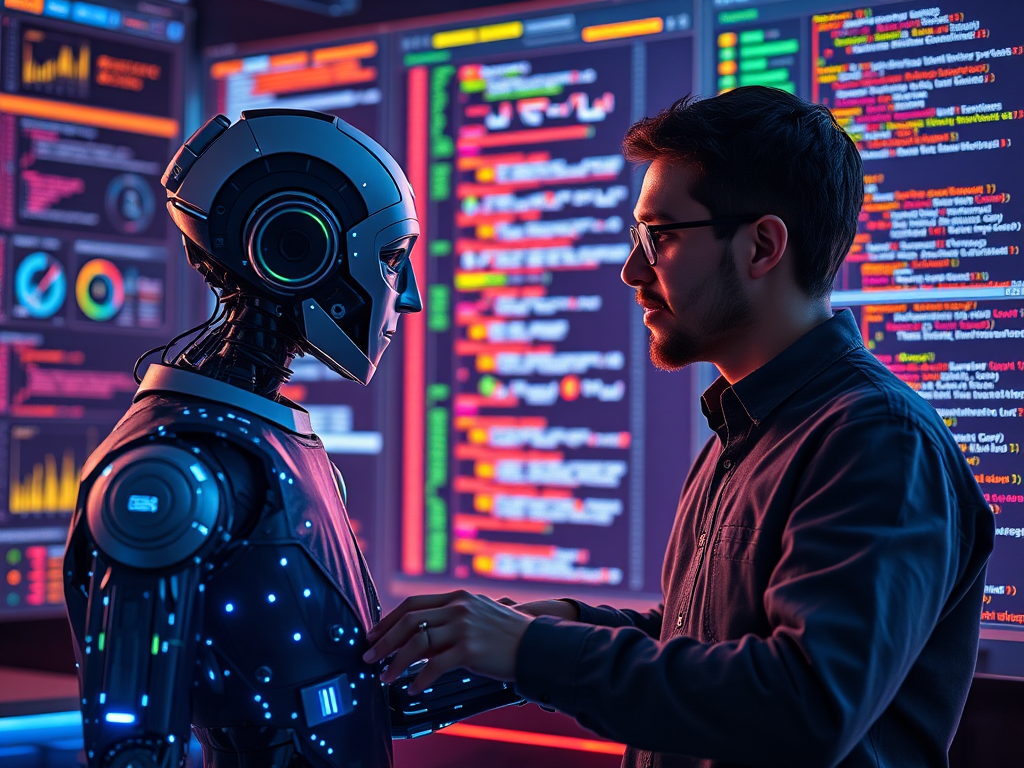
Over the last year, I’ve been watching something interesting unfold across the tech ecosystem. It’s not just that AI tools are getting smarter. It’s the way we interact with software that is quietly shifting. Interfaces are no longer static pages or dashboards; they’re becoming collaborative spaces where AI and humans work together.OpenAI and the Shift Toward Agentive Workflows
Every OpenAI release feels like it pushes the boundaries of what AI can actually do, not just what it can say. Even if you’re not writing complex code yet, you can sense the shift happening.
What caught my attention recently is how OpenAI is positioning models not just as conversational tools but as capable agents that can:
- browse,
- reason step-by-step,
- call tools,
- generate structured outputs,
- and hold persistent goals.
For example, I tried a simple workflow where an AI agent monitored a sample dataset and drafted periodic insights. Nothing fancy — but it gave me a glimpse of how enterprise analytics might start to look in the next few years. Instead of asking for reports, you’ll just tell your AI:
“Track these metrics. Inform me when something changes. And tell me what you recommend next.”
This is the real shift: AI not as a bot, not as a dashboard assistant, but as a participant in decision-making.
Cursor: Coding With an AI Partner Instead of an IDE
Cursor is the first tool I’ve seen that actually feels like a step toward AI-native development. Even as someone who’s not fully coding yet, I can recognize how different it is.
Traditional coding tools wait for you to write instructions. Cursor, on the other hand, is more like a colleague sitting next to you, reading the code, understanding the context, and suggesting what to do next.
One of my friends showed me an example: he typed a vague instruction like
“Make this API faster and clean up the logic”
and Cursor didn’t just generate boilerplate — it rewrote the module, added comments, fixed a few silent bugs, and explained why those changes mattered.
That’s not autocomplete. That’s a co-developer.
When I imagine this in enterprise environments, the implications are huge.
AI won’t just help developers code faster; it will enable non-coders (like project managers, analysts, domain experts) to shape applications simply by describing what they want.
And that brings me to the UI part.
The UI Itself Is Becoming an Agent
One of the biggest surprises for me this year is how much the UI landscape is changing.
Interfaces used to be collections of buttons, dropdowns, pages, and static dashboards. You had to learn the system. You had to navigate it manually.
But with AI moving deeper into the interface, something new is emerging:
Adaptive, context-aware, AI-driven UI.
A few examples I’ve seen:
- Dashboards that rewrite themselves based on what you’re analyzing
- Forms that get shorter because the system already knows what you need
- Applications that open the next most relevant workflow without being asked
- Custom UI “views” generated on the fly based on your role or intent
Imagine this in analytics.
Instead of browsing reports, an AI-driven UI might say:
“I looked at last week’s performance and found two trends you should see. Here’s a visualization I generated just now. Also, I prepared three what-if scenarios.”
You’re no longer navigating the system — you’re negotiating decisions with it.
Why This Matters for Agentic AI and Analytics
- OpenAI is building the underlying intelligence.
- Cursor is redefining how we create.
- AI-driven UI is reshaping how we interact.
Put all three together, and you get an enterprise environment where:
- Analysts don’t spend time preparing reports; agents surface insights automatically
- Developers don’t start from scratch; AI co-builds and maintains systems
- Users don’t click around dashboards; the interface adapts to the situation
- Organizations don’t wait for monthly reviews; intelligence flows continuously
This is the kind of transformation I find exciting — not theoretical, but very real. We’re moving toward a world where AI becomes part of the workflow, not an add-on to it.
Even though I’m still at the early stages of my AI journey, I’m convinced of one thing:
The future belongs to people who understand how agents, analytics, and adaptive UIs work together.
You don’t need to master everything at once. But being aware of these shifts — especially now — helps you see where opportunities are forming.
As I continue exploring Agentic AI and Analytics, I’ll be sharing more of these observations and small experiments on SappersAI. There’s a lot happening, and this space is becoming more interesting every month.
 SappersAI
Leave a comment